Dimensional Stability and Quality Criteria in Smart Screed Technologies
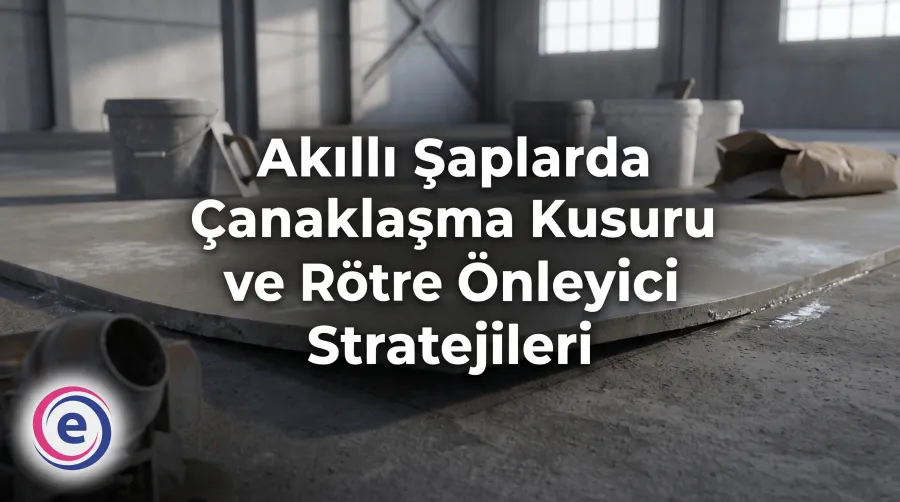
In the modern construction industry, surface preparation is a critical phase to ensure that the subsequent coating (epoxy, polyurethane, PVC, ceramic, or wood) is durable and aesthetic. Self-leveling smart screeds have become the standard solution in this field due to their high fluidity and capacity to create smooth surfaces. However, the formulation of these systems is far more complex than traditional concretes or mortars. One of the most common and challenging problems faced by smart screed manufacturers and R&D specialists is the "curling" defect and the micro-cracks that develop as a result.
For a smart screed to be considered successful, it is not enough for it to exhibit excellent flow; it must also perfectly maintain its dimensional stability during the setting and drying processes. In this article, as Ekvator Kimya, we will examine the physicochemical basis of the curling defect in smart screed systems and detail how to integrate Shrinkage Reducing Admixture (SRA) strategies into formulations to minimize this problem.
What is the Curling Defect and Why Does It Occur?
Curling is the phenomenon where the poured screed layer curls upward, especially at the edges and corners, and loses its bond with the underlying substrate (delamination). The fundamental cause of this deformation is the disproportion between the drying (moisture loss) rates of the upper and lower surfaces of the screed layer. When the smart screed is applied to the floor, the upper surface is in direct contact with the air and rapidly loses water through evaporation. In contrast, the lower surface loses its moisture much more slowly as it contacts the existing concrete or primer layer.
As the upper surface dries, it tries to shrink volumetrically (shrinkage). However, since the lower surface is still moist and does not shrink at the same rate, a stress gradient forms across the cross-section of the screed. This differential drying shrinkage causes the material to curl upward from the edges, resulting in curling. If the tensile strength within the screed itself is lower than this drying stress, map-type micro-cracks and hairline fissures occur on the surface. Prior to floor coating, this situation means the failure of the entire project and leads to very serious financial losses.
The Physicochemical Basis of Shrinkage: Examination on the Axis of Capillary Tension and Young-Laplace
To prevent curling and shrinkage, it is necessary to go to the root cause of the problem. In cement or ternary binder (Portland cement, calcium aluminate cement, calcium sulfate) systems, water is both required for the hydration reaction and ensures that the mixture achieves the desired fluidity. In smart screeds, more water than necessary for hydration is generally used to provide fluidity. After setting, this excess water begins to evaporate from the capillary voids (pores) within the matrix.
As the water evaporates, a meniscus (curved water surface) forms inside the capillary voids. The high surface tension of water (approximately 72 mN/m) exerts a strong inward pulling force (capillary pressure) through this meniscus toward the solid walls of the cement matrix. According to the Young-Laplace equation, the smaller the diameter of the capillary void and the higher the surface tension of the water, the greater the negative pressure (tensile force) exerted on the solid matrix. This is the main physical force that causes the screed to undergo volumetric shrinkage (contraction).
How SRA (Shrinkage Reducing Admixture) Technology Works?
Shrinkage Reducing Admixtures (SRA) are special organic compounds specifically designed to interfere with the aforementioned capillary tension mechanism. These raw materials, which generally consist of glycol ether, polypropylene glycol, or complex polyol derivatives, have an amphiphilic molecular structure (having both water-loving and oil-loving parts).
When SRA molecules are added to the screed formulation, they dramatically decrease the surface tension of the water in the mixture (e.g., dropping it from 72 mN/m to 30-40 mN/m levels). Since the surface tension of the meniscus formed as the water in the capillary voids evaporates is lowered, the tensile force (capillary pressure) exerted on the walls of the cement matrix decreases proportionally. This reduction of stress on the solid matrix ensures that drying shrinkage is largely prevented. Consequently, even if there is a drying difference between the upper and lower surfaces of the screed, the stress generated does not reach a level sufficient to bend or crack the screed, effectively preventing the curling defect.
Advantages of Using SRA in Smart Screed Formulations
The integration of a correctly selected SRA raw material into smart screed systems simultaneously improves many quality parameters targeted in R&D processes:
- Prevention of Curling: Dimensional deformations caused by differential drying are minimized, and the screed adheres to the substrate with zero tolerance.
- Increase in Crack Resistance: Thanks to the reduction in surface tension, internal stresses are decreased, thereby preventing the formation of micro- and macro-cracks.
- Better Surface Quality: The use of SRA helps the surface dry smoother and more homogeneously, creating an excellent substrate for the final floor covering.
- Large-Area Applications: Since the risk of shrinkage is reduced, screed can be poured continuously over much larger areas at a single time with less need for expansion joints (dilatation).
Synergistic Effects and Compatibility with Other Construction Raw Materials
Smart screed formulations have extremely delicate balances. When an SRA raw material is incorporated into the system, how it interacts with other construction raw materials in the formula must be carefully examined. Compatibility with Polycarboxylate Ether (PCE)-based superplasticizers, thickeners such as cellulose ether, set accelerators such as lithium carbonate, and retarders such as tartaric acid is of vital importance.
Some shrinkage reducers may increase or decrease the air-entraining tendency of the system. Therefore, the defoamer ratio used in the formulation may need to be recalibrated according to the SRA profile. Additionally, SRA molecules can slightly slow down the hydration kinetics of cement particles; this can cause minimal extensions in setting times. Flow ring tests, setting time determinations, and shrinkage channel tests to be performed during the R&D phase are essential for determining the optimum SRA dosage.
Compensation vs. Stress Reduction: The Difference Between SRA and Expanding Agents
Screed manufacturers sometimes tend to use expanding agents (e.g., calcium sulfoaluminate-based agents or quicklime) instead of SRA to prevent shrinkage. Expanding agents do not prevent shrinkage; instead, they attempt to neutralize the effect of shrinkage by causing the material to expand in the initial stage (compensation). However, this strategy is risky in thin-layer application systems such as smart screeds. Uncontrolled expansion can lead to blistering, loss of strength, or delamination of the material.
SRA technology, on the other hand, is not a compensation method, but a proactive solution that directly eliminates the physical cause of shrinkage (capillary tension). In modern smart screed formulations using a ternary binder, careful combination of expanding agents with SRA (hybrid systems) ensures the highest level of dimensional stability.
Ekvator Kimya Expertise in R&D and Quality Control Processes
Achieving the zero-defect target in self-leveling screed production is possible not only by selecting the right raw material, but also by optimizing the synergy of this raw material with the entire recipe. The molecular weight, evaporation rate, and hydrophilic-lipophilic balance of shrinkage-reducing (SRA) additives directly affect the field performance of the final product.
As Ekvator Kimya, we offer the most qualified raw material solutions to screed and construction chemicals manufacturers with our deep knowledge and innovative approach in the industrial chemistry sector. You can examine our broad products portfolio to solve curling, shrinkage, or fluidity problems encountered in your formulations, achieve cost/performance optimization, and elevate your product quality to international standards.
You can contact our expert engineering staff directly via our contact page to design the correct SRA strategy in the next-generation smart screed projects you are developing, request samples, and receive technical consultancy specific to your process. Ekvator Kimya is always by your side for dimensionally flawless, high-performance, and durable flooring solutions.